FOMC Transparency

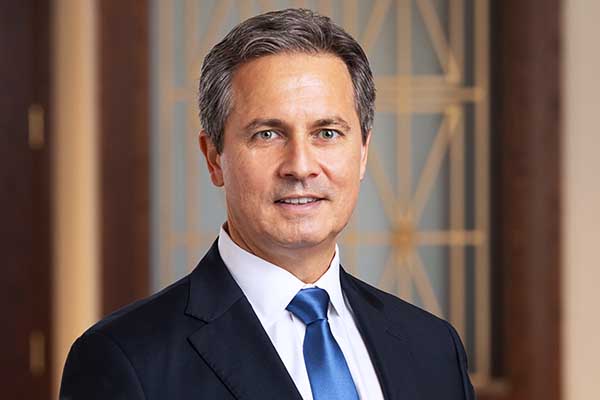
William Poole*
President, Federal Reserve Bank of St. Louis


Ozark Chapter of the Society of Financial Service Professionals
Springfield, Mo.
Oct. 6, 2004

* I appreciate extensive assistance provided by my colleagues at the Federal Reserve Bank of St. Louis.  Robert H. Rasche, Senior Vice President and Director of Research and Daniel L. Thornton, Vice President in the Research Division, were especially helpful.  I take full responsibility for errors.  The views expressed are mine and do not necessarily reflect official positions of the Federal Reserve System. .


FOMC Transparency

Transparency is at the forefront of many monetary policy debates today.  The Federal Open Market Committee (FOMC) has had several formal discussions of communications issues in recent years, and the subject comes up fairly frequently in FOMC meetings and speeches by FOMC members.(1)

It is hardly surprising that central bankers are more talkative than they were just a decade or so ago, and more concerned about how to improve transparency and communication with the market.  Perhaps only one issue is settled: Transparency is important but is hard to accomplish because miscommunication is so easy.  Clearly, more talk does not necessarily mean greater transparency. 

Discussions of monetary policy communication frequently center on three dimensions of transparency: 1) transparency about the objectives of monetary policy; 2) transparency about current monetary policy actions; and 3) transparency about expected future monetary policy actions.  I’ll organize my remarks around these dimensions.

Before proceeding, however, I want to emphasize that the views I express here are mine and do not necessarily reflect official positions of the Federal Reserve System.  I thank my colleagues at the Federal Reserve Bank of St. Louis, especially Bob Rasche, Senior Vice President and Director of Research, and Dan Thornton, Vice President in the Research Division,  for their extensive assistance, but I retain full responsibility for errors.

Background

The first formal move in the direction of transparency was initiated by the Reserve Bank of New Zealand, which in 1990 negotiated an agreement with the government of that country making the Bank responsible for maintaining inflation within a specified range.  Hence, the Reserve Bank of New Zealand was the first central bank to be transparent about its policy objective.

The Reserve Bank of New Zealand has been a leader on the other two dimensions of transparency as well.  For some time now it has announced its setting of its policy instrument—the official cash rate.  The Bank also publishes, on a semiannual basis, its forecasts over a several-year horizon for a number of economic variables, including the 90-day bill rate.  Given that the Reserve Bank of New Zealand states that the 90-day rate is closely linked to its official cash rate, these forecasts come very close to projecting a conditional course of monetary policy actions.  Thus the Reserve Bank is transparent on all three dimensions of transparency I outlined earlier.

A number of other central banks have followed the lead of the Reserve Bank of New Zealand by adopting and announcing specific numeric inflation objectives.  These central banks have become known as “inflation targeters.”  Currently included in this group are the Bank of Canada, the Reserve Bank of Australia, the Bank of England and the central banks of Albania, Brazil, Chile, Columbia, the Czech Republic, Georgia, Hungary, Iceland, Israel, Mexico, Norway, Peru, Philippines, Poland, Serbia, Sierra Leone, South Africa, South Korea, Sri Lanka, Sweden, Switzerland, Tanzania, Thailand and Turkey.  All of these institutions are transparent with respect to their monetary policy objectives.  Moreover, all of these central banks announce changes in the settings of their policy instrument (typically a short-term interest rate.)  Practice differs from institution to institution on the release of forward-looking information such as forecasts for future developments in the economy.

The practice of the European Central Bank differs somewhat from that of the “inflation targeters.”  The ECB offers a degree of transparency with respect to its monetary policy objective—the ECB has an announced goal of keeping the inflation rate close to but below two percent per annum “in the medium run.”  However, the ECB has never announced an explicit definition of the “medium run.”  The ECB announces changes in its policy rates, but does not disclose forecasts for the EU economies, or minutes of policy discussions.

The Federal Reserve’s practice of transparency has evolved over time.  I will discuss this evolutionary process with respect to the three dimensions of transparency.  I note at the outset that I only endorse unconditionally the first two dimensions of transparency.  For reasons I will make clear later, forecasting future policy actions is a complicated issue; without discussing the complexities and the nature of possible policy forecasts it would be misleading to offer a simple “I support” or “I oppose.”

The Evolution of Transparency at the Federal Reserve

Originally, the minutes of the Federal Open Market Committee (FOMC) meetings were not made public.  In response to passage of the Freedom of Information Act, which became effective in 1967, the FOMC divided the minutes into two documents.  One was called the Memorandum of Discussion, which was released with a five-year lag.  The other was a shorter document called the Record of Policy Actions, which was released with relatively little delay.  The Memorandum was a set of complete minutes, identifying speakers, but not in the form of a verbatim transcript.  The Record of Policy Actions reported the Committee’s decisions and provided a summary of the Committee’s deliberations.  However, the Record did not identify by name which FOMC members took which positions. 

In 1976, in response to a court suit challenging the legality of delaying the release of the Memorandum, the FOMC discontinued publication of that document.  The Committee continued to publish the Record of Policy Actions but in 1993 changed its name to “Minutes of FOMC Meetings.”  Over time the release lag on the Record/Minutes was shortened until, at the present time, the Minutes are available two days after the next scheduled FOMC meeting. 

In the fall of 1993, members of the FOMC became aware that tape recordings of all FOMC meetings from March 1976 had been preserved.  These tapes had been made to assist with the preparation of the Record of Policy Actions and to provide accurate information about the Committee’s views on current policy to senior staff members.  However, it was commonly thought within and without the Federal Reserve that the tapes were destroyed when that process had been completed.  Many FOMC members where surprised when they learned that the tapes still existed.

In response to congressional pressure, the FOMC agreed in February 1995 to release, with a lag of five years, verbatim transcripts created from the tapes of FOMC meetings and to transcribe past recordings as quickly as possible.  At the present time, published transcripts are available for all FOMC meetings from 1979 through 1998.  The transcript is complete, except for redactions of confidential material relating to individual firms and foreign governments and central banks.  No other central bank provides such complete and explicit records of its policy deliberations.

The FOMC has not adopted a precise, numerical statement of its monetary policy objectives.  The Federal Reserve Act, as amended, requires the Board of Governors and the FOMC “to promote effectively the goals of maximum employment, stable prices and moderate long-term interest rates.”  The FOMC has interpreted its objective as the responsibility to achieve price stability in order to promote maximum sustainable economic growth.

In contrast to the inflation targeting central banks, the FOMC has never associated a value or range of values with “price stability.”  Chairmen Volcker eschewed quantitative specifications of price stability in favor of a less specific definition.  In a 1983 lecture, Volcker put his position this way:

A workable definition of “reasonable price stability” would seem to me to be a situation in which expectations of generally rising (or falling) prices over a considerable period are not a pervasive influence on economic and financial behavior.  Stated more positively, “stability” would imply that decision-making should be able to proceed on the basis that “real” and “nominal” values are substantially the same over the planning horizon—and that planning horizons should be suitably long.(2)

Subsequently, Chairman Greenspan adopted essentially the same definition of price stability.(3) 

A small step towards a more explicit statement of the FOMC’s inflation objective was taken in 2003 when, at the May FOMC meeting, the Committee indicated that “the probability of an unwelcome substantial fall in inflation, though minor, exceeds that of a pickup in inflation from its already low level.”  This statement gives a hint about the view of committee members of the lower end of a tolerance range of measured inflation.  At that time inflation, as measured by the Committee’s preferred “core” personal consumption price index, was approximately 1 percent.  To date, the Committee has not addressed the question as to what inflation rate would mark the limit such that a substantial rise in inflation above that rate would be unwelcome.

The transparency of the FOMC with respect to policy actions has improved considerably over the past 10 years.  Beginning with the February 1994 meeting, the FOMC issued a press release at the conclusion of every meeting at which a policy action was initiated.  In spite of the fact that policy actions had been formulated in terms of a specific quantitative objective for the effective federal funds rate since the 1980s, the FOMC only began including the quantitative funds rate objective (called the “intended federal funds rate”) in its formal Directive to the Federal Reserve Bank of New York at the August 1997 FOMC meeting.(4) 

Beginning with the May 1999 FOMC meeting the FOMC issued a press release at the conclusion each meeting at which there were major shifts in the Committee’s views about prospective developments.  These statements included an indication of the policy “bias” which was widely interpreted in the press and in financial markets as hinting at future policy actions.

After the January 2000 FOMC meeting the policy “bias” in the press release was dropped in favor of a “balance-of-risks” assessment.  The statement following the September 2004 FOMC meeting read as follows: “The Committee perceives the upside and downside risks to the attainment of both sustainable growth and price stability for the next few quarters to be roughly equal.”  To provide guidance on its thinking, the Committee might assess the risk of achieving one or the other, or both, of the goals to be tilted to the upside or downside.

Adoption of the balance-of-risks language reflected the Committee’s effort to avoid confusion about the interpretation of the wording of the “bias” statement which specifically referred to the “intermeeting period.”  The replacement balance-of-risks statement focuses on providing insight into the Committee’s assessment of the outlook for future real growth and inflation, but falls short of providing a full fledged forecast of the economy.  Along with the decision to adopt the balance-of-risks language, the Committee adopted the policy of providing a press release after every FOMC meeting.

Another important step toward more predictable policy was for the FOMC to confine policy actions to regularly scheduled meetings.  Since February 1994, policy actions other than at a regularly scheduled FOMC meeting occurred only in unusual circumstances.

Finally, in May 2003 the Committee added an additional sentence to the press release: “In these circumstances, the Committee believes that policy accommodation can be maintained for a considerable period.”  This language was revised in January 2004 to “the Committee believes that it can be patient in removing its policy accommodation.”  A second revision occurred in May 2004 to “the Committee believes that policy accommodation can be removed at a pace that is likely to be measured.”  The first two versions of this sentence were commonly interpreted as placing the Committee on hold with respect to future policy actions; the last revision was widely interpreted as hinting that the intended funds rate would be raised in a succession of 25 basis point increments.

Most recently, in June 2004, the Committee conditioned its “measured pace statement” with the additional sentence that “the Committee will respond to changes in economic prospects as needed to fulfill its obligation to maintain price stability.”  To date, the actions of the Committee have been consistent with the public interpretations of these statements; no changes in the funds rate occurred under the “considerable period” and “patient” statements and there have been three increases of 25 basis points each in the intended federal funds rate under the “measured pace” statement.

Why Transparency?

It is natural to ask why central banks need to be transparent.  One answer is that central banks are governmental agencies and as such are accountable to the public for their actions.  As laudable as it sounds, the accountability argument only gets you so far.  For years, Federal Reserve officials argued that immediate release of policy decisions would make markets more unstable and policy implementation more costly and difficult; creating these effects through disclosure would obviously be inconsistent with the Fed’s public responsibilities.(5)

Views on whether immediate release of policy decisions would damage monetary policy have changed.  Still, the same basic issue remains: How do we determine what level of transparency serves the public interest?  For example, some have suggested that the FOMC should conduct its deliberations in public, perhaps televised on C-Span.  Common sense and experience suggest, however, that such a practice would curtail the free and open exchange of ideas that characterize FOMC meetings.

Anything that would diminish the effectiveness of the policy process would be inconsistent with the Fed meeting its responsibilities.  Accountability only requires that a central bank be open and honest about its objectives and be held accountable for achieving those objectives.  Certainly, the ultimate test is whether disclosure yields better policy outcomes.

The roots of central bank transparency are found not only in the principles of democratic accountability but also in economic theory.  The economics of transparency is a subject that can be studied systematically, using all the tools of modern economics.  Both economic theory and experience demonstrate that the effects of monetary policy on the real economy—real GDP, real interest rates, the unemployment rate, etc.—are transient.  However, “transient” effects may last for a period measured in years rather than months.  Monetary policy actions only have a lasting, or permanent, effect on inflation, although uncertainly about policy can increase short-run volatility and, perhaps, damage the economic growth process.  In such a world, the role of the market’s expectations about the central bank’s objective for inflation is the principal reason for central bank transparency. 

Here is where the story gets a little complicated, so it is useful to consider some extreme and unrealistic cases to illustrate the point.  Consider a world where monetary policy actions have no long-run impact on real variables such as the unemployment rate, but no short-run impact either.  Economic theory predicts this state of affairs if all wages and prices were perfectly flexible.  In such a world, economic agents would realize that an easing of monetary policy would result in higher prices.  Knowing this outcome, prices would adjust immediately: policy actions would have no effect on the real economy.

Of course, in the real-world economy, prices are not perfectly flexible.  This feature of market behavior means that policy actions have short-run effects on the real economy.  A policy problem arises because policymakers do not know exactly how monetary policy actions are translated to the real economic variables; policymakers must estimate, or guess, the magnitude of the response of such variables to policy changes and how long these effects last.  The only certainty is that effect of policy actions on real variables eventually dissipates.  “Eventually” may cover a period of several years, and may be longer in some circumstances than others.  It is worth noting that these hedges on my part reflect ignorance—mine and the profession’s—and not obfuscations.  We just don’t have precise estimates of the magnitudes and durations of effects of monetary policy on real variables.

Given that policy actions have a transient effect on the real economy, but only a lasting effect on prices, and given that the effects on the real economy are uncertain in both magnitude and duration, it is important that the central bank be transparent about both its short-run objective for the real economy and its long-run inflation objective.  Transparency should help markets to make the best possible adjustments over time and minimize uncertainty flowing from monetary policy itself.

Consider now the issue of the inflation objective.  While there is widespread agreement among policymakers and the profession that rapid inflation—such as the inflation that characterized the 1970s and early 1980s—has damaging consequences for the real economy, particularly, the long-term rate of economic growth, there is much less agreement on the rate of inflation that maximizes the long-run rate of economic growth.  That is, there is little agreement among economists and policymakers about the “optimal” rate of inflation.  At the July 1996 meeting of the FOMC, in response to a question by Governor Yellen about the level at which inflation no longer effects business and household decision, Chairman Greenspan responded, “zero, if inflation is properly measured.”(6)

I agree.  Given the known biases in price indices, however, exactly what this definition implies for inflation as measured by the personal consumption expenditure (PCE) price index or the consumer price index (CPI) is uncertain.  I am inclined to believe that zero inflation correctly measured translates into about 1 percent inflation for the PCE index and about 1.5 percent for the CPI. 

There is much less agreement in the profession about how much and how long real economic variables are affected by policy actions.  This disagreement is confounded by the fact that the effects of monetary policy on the real economy can be influenced by other developments over which policymakers have no control.  For example, a particular policymaker might argue that a given easing of policy will not show in prices for X months if there are no other changes in the economic environment.  The same policymaker would likely argue this period will be longer if the easing in policy is accompanied or followed closely by a marked increase in productivity.  If the increase in productivity were permanent, this policymaker might argue that the policy easing may have no effect on the price level: indeed, the rise in productivity could more than offset the policy actions so that, in the long-run, the prices decline rather than increase, as they would in an unchanged economic environment.

It is easy to see how uncertainty about the magnitude and timing of the effects of policy actions, combined with uncertainty about how other factors impact the magnitude and timing of these effects, can result in significant differences of opinion about the effects of monetary policy.  That means that there may also be significant differences of opinion about the extent to which policy can be used effectively to offset the effects of sudden shocks, or evolving long-run structural changes, to the real economy. 

Given these real-world uncertainties, it is important for policymakers to be as explicit as possible about not only the central bank’s long-run inflation objective but also about its short-run policy objectives.  The more ambiguous policymakers are about these objectives, the more difficult it will be for the public to differentiate policy actions that may reflect a change in the central bank’s long-run inflation objective from actions intended only to offset the effects of real shocks on economic activity. 

Of course, uncertainty about the inflation objective might be reduced by adopting a specific numerical long-run inflation objective.  Real-world experience with announced inflation objectives in other countries shows that the issue is more complicated than it may seem.  If an objective is stated as a number, what is the effective range around that number?  That is, an inflation objective stated as 2 percent might in practice mean 1-3 percent.  Is the objective to be met over a time horizon of six months or two years?  Might the objective be temporarily modified in the face of special circumstances, such as the 9/11 attacks?  Being clear about an inflation objective means being clear, or as clear as possible, about all dimensions of such an objective.  I personally believe that it is possible to address these practical concerns, and state an inflation objective in an effective way.  But that is a subject for another day.

Although the FOMC has not announced a precise inflation objective, it has taken a number of steps to better communicate its objectives.  The FOMC has made it clear that it “seeks monetary and financial conditions that will foster price stability and promote sustainable growth in output.”  This statement clearly indicates that the Committee’s price stability objective is consistent with sustainable growth in output.  While reasonable people may differ on exactly what this inflation rate is, very few would argue that inflation of 4 percent or higher is consistent with maximum sustainable output growth.  Most would choose a much lower rate.

The Committee has yet to form a consensus on the circumstances and extent to which monetary policy can be used to offset shocks to the real economy without endangering its price stability objective.  To the extent that it reveals the Committee’s sensitivity to short-run objectives of policy, the balance-of-risks statement is beneficial in this regard.  The balance-of-risks statement also gives market participants a sense of the Committee’s views on what it believes are the risks are for its short-run and long-run objectives going forward. 

The balance-of-risks language is, however, somewhat ambiguous.  For example, one might ask: if the risks are unbalanced, why was policy not adjusted to create balanced risks going forward?  One answer is that there is no need that these risks be balanced.  The inflation objective is a long-run objective, while other objectives are short-run.  There is no economic rationale for balancing such objectives.

The balance-of-risks statement can be misinterpreted because of the prevailing view that employment and inflation necessarily rise and fall together.  In fact, employment and inflation, or their changes, are not highly correlated.(7)  A scatter plot of the change in employment and inflation reveals that there is no strong positive relationship between inflation and employment.  Sometimes they move together, sometimes they move in opposite directions.  Consequently, in my view, an unbalanced balance-of-risks statement should not be interpreted as an indication of a future policy action in a specific direction.  Unfortunately, it is too often interpreted that way by market participants.  By failing to clarify the intent of this statement, the FOMC tacitly shares in this confusion.

Statements about Future Policy

In 2000, the FOMC switched from the “tilt” language to the balance-of-risks language with the explicit intent to avoid signaling future policy actions.  Nevertheless, in August 2003 the Committee added a statement that was intended to give the public some idea of how it believed policy might proceed in the near future.

Of necessity, monetary policy is made with an eye to the future—there is nothing current policy can do about the past.  Because of the inherently forward-looking nature of policymaking, policy is made with an expectation of how the future events are likely to unfold.  Moreover, it is only natural that policymakers assign a higher probability to some events than to others.  In so doing, policymakers form judgments about whether additional moves to tighten or loosen policy are likely to be desirable.  In our present situation, the issue is whether policy tightening might proceed more slowly or more rapidly than one might otherwise anticipate.

The issue with such statements is that they might be misinterpreted as a firm commitment to proceed in a specific way.  At any given time, policymakers might feel more or less certain about the probable direction of policy in coming months, but I think it safe to say that they never believe that future policy should be totally unresponsive to events.  No matter how firm a conviction I have about the future direction of policy, I know that things could happen that would make me change my mind.  The terrible events of 9/11 illustrate this point dramatically.  It would have been irresponsible for the Fed to continue on a preset path, ignoring this event.

Thus, forward-looking Fed policy statements should always be interpreted as conditional on future events.  A forward-looking statement is not an ironclad commitment but rather a statement of belief based on what we now know.  It is unfortunate whenever such a statement is read as a commitment.  The expected path for the intended federal funds rate is set based on all of the currently available information—including expectations of future events.  If the future turns out exactly as policymakers anticipated at the time the policy path is set, there will be no need to reset it.  Only when new information suggests that the previous setting is no longer consistent with achieving the objectives of policy does the Committee need to adjust the setting.

At any given time, the policy path I anticipate may be held with greater or lesser conviction.  Put another way, it may take more or less new information outside the range of what I had anticipated to change my mind on the path.  Policy decisions are sometimes close calls and sometimes not.  And, of course, different policymakers do not all see things the same way.  The communications challenge with respect to future policy is to convey accurately how clear the likely policy direction is.  Sometimes the expected policy course might only be changed if major unforeseen events occur, and sometimes if an accumulation of smaller bits of new information suggest that a change in policy is appropriate.

Given these ambiguities and the danger of misleading the market when indicating a probable future course for policy, I have generally been opposed to announcing, or hinting, future policy adjustments.  However, this year’s situation is unusual.  When the current round of policy tightening began last June, the target for the intended federal funds rate was 1 percent.  After three adjustments of 25 basis points each, the rate now stands at 1.75 percent.  When the process started, there was little doubt in anyone’s mind that a 1 percent funds rate was significantly below the long-run equilibrium consistent with price stability.  Hence, there was little doubt that, over time, the FOMC would raise the intended funds rate.  By  saying that the policy tightening could proceed  at a measured pace, the FOMC indicated a belief that economic conditions going forward likely would allow steady adjustments of the funds rate toward its long-run equilibrium level. 

As the process continues, obviously, the intended rate will in time reach a level such that it is not so clear any more that further increases are in order, or that further increases should continue at the same pace.  The measured pace language remains in the FOMC’s most recent policy statement, reflecting the Committee’s expectation at its last meeting, in mid September.  What actually happens will depend on economic events that are subject to wide forecasting errors.  Hence, it is important the market not interpret this statement as a commitment.  It is possible—I would argue likely at some point—that new information will cause the FOMC to adjust the target at a pacedifferent from what is currently anticipated.  The pace could be faster or slower, depending on how the economy evolves.  In an attempt to underscore this eventuality, the Committee added a sentence to its June 2004 public statement and reiterated it in August and September.  The statement read: “Nonetheless, the Committee will respond to changes in economic prospects as needed to fulfill its obligation to maintain price stability.”

I believe that it is important to provide as much information as possible about the rationale for policy actions.  It might be useful to provide information about likely future policy on a routine basis, but the difficulties of doing so should not be underestimated. 

For one thing, the FOMC will not necessarily agree on the likelihood of a future action.  It may be confusing to the public if a policy direction is indicated after some FOMC meetings, when the direction is pretty clear, and not after other meetings, when the probable direction is not clear or subject to dispute within the FOMC.  Even if an agreement could be reached, communicating it to the public would be difficult.  Indeed, if the probability of future policy action were sufficiently large, some observers might ask why wait; why not take the action now?

Moreover, it is important to note that a statement of probable future policy direction may actually be a more important policy decision than the setting of the current intended federal funds rate.  How easy would it be for a member to agree to a policy action on the intended federal funds rate but dissent over the wording of the policy statement indicating a probable future direction to policy?  The FOMC decision process certainly includes the obligation of FOMC members to dissent when they have a fundamental disagreement with the policy decision; that process is well understood today with reference to the decision on the intended federal funds rate.  To maintain the integrity of the dissent process, the public will have to understand that dissents may be in order over the wording of the policy statement, a possibility that has not been widely discussed.

Concluding remarks

Let me summarize this discussion.  The basic framework for policy is that the FOMC sets the intended federal funds rate and individual members have in mind a probable future course for the funds rate.  The probable future course may be pretty clear, or may not be, depending on circumstances.  Committee members vote on the intended funds rate at the end of each meeting, but historically have not voted, or even tried to develop a consensus, on the probable future direction of policy.  Members understand that, whatever their views about the future, actual policy actions in the future will be conditional on information about the economy that cannot be forecast.  What the FOMC does in the future is of necessity determined jointly by the FOMC’s policy objectives and economic events as they unfold. 

The Committee has an obligation to be clear about its policy objectives and should announce any changes in those objectives.  In fact, there is a broad public consensus about these objectives and I would be surprised if the objectives change in any material way in the future.  Objectives may be clarified, but I do not anticipate significant change.

With clarity over objectives, the FOMC needs to act in as consistent a way as possible in pursuit of the objectives, and to explain the process as clearly as possible.  When the process is well understood, it is unlikely that policy actions will take the market by surprise.  These policy actions will typically be driven by the arrival of new information, which could not be forecast accurately at the time of previous FOMC meetings. 

In instances where the market appears to misinterpret the objectives or the intent of a particular action, the FOMC must endeavor to clarify its intention.  But more important than dealing with individual episodes is ongoing discussion about monetary policy.  A danger in relying on the FOMC’s own forecasts of its policy direction is that the market will focus on these forecasts and not on the underlying rationale.  Were that to happen, the market will inevitably be surprised when events require policy actions that differ from the FOMC’s own forecasts.

Now that you’ve heard my argument, I’m sure you will agree that transparency may sound easy, but is not.  I’d be delighted to take questions


Footnotes
  1. I myself gave a speech on the subject in August 2003: “Fed Transparency: How, Not Whether”  The speech was later published in the Federal Reserve Bank of St. Louis Review, Vol. 85, No. 6 (November/December 2003).
  2. Paul A. Volcker, “Can We Survive Prosperity?”  Remarks at the Joint Meeting of the American Economic Association and the American Finance Association, San Francisco, December 28, 1983, p. 5. 
  3. See for example, Alan Greenspan, “Transparency in Monetary Policy,” Federal Reserve Bank of St. Louis Review (July/August 2002), p. 6.

  4. However, starting with the meeting in January 1996, the Committee’s statement issued after a meeting at which it changed the intended funds rate did indicate the anticipated change in the federal funds rate in quantitative terms.  “In a related move, the Federal Open Market Committee agreed that the reduction would be reflected fully in interest rates in the reserve markets.  This is expected to result in a reduction in the federal funds rate of 25 basis points, from about 5-1/2 percent to about 5-1/4 percent.”  (Excerpted from statement issued January 31, 1996.)
  5. The Minutes of the FOMC meeting of June 20, 1967 list six reasons for delayed release of information.
  6. Transcript of the July 2-3, 1996 meeting of the FOMC, p. 51.
  7. William Poole, “Fed Transparency: How, Not Whether,” Federal Reserve Bank of St. Louis Review (November/December 2003), p. 7.

Back to top.